In today’s world, the pursuit of looking and feeling your best has never been more popular. From subtle enhancements to dramatic transformations, the choices are endless. But if you’re considering a cosmetic procedure, the first question is often: should I choose non-surgical cosmetic treatments or go for plastic surgery?
Both paths have their unique benefits, risks, and costs, and the decision ultimately depends on your goals, lifestyle, and personal preferences. At Pulse Multispeciality Hospital, we frequently help patients navigate this decision, guiding them to the safest and most effective solutions.
In this comprehensive guide, we’ll explore the differences between non-surgical treatments and plastic surgery, compare their pros and cons, highlight popular procedures, examine costs and recovery, and help you determine which option might be right for you.
Understanding Non-Surgical Cosmetic Treatments
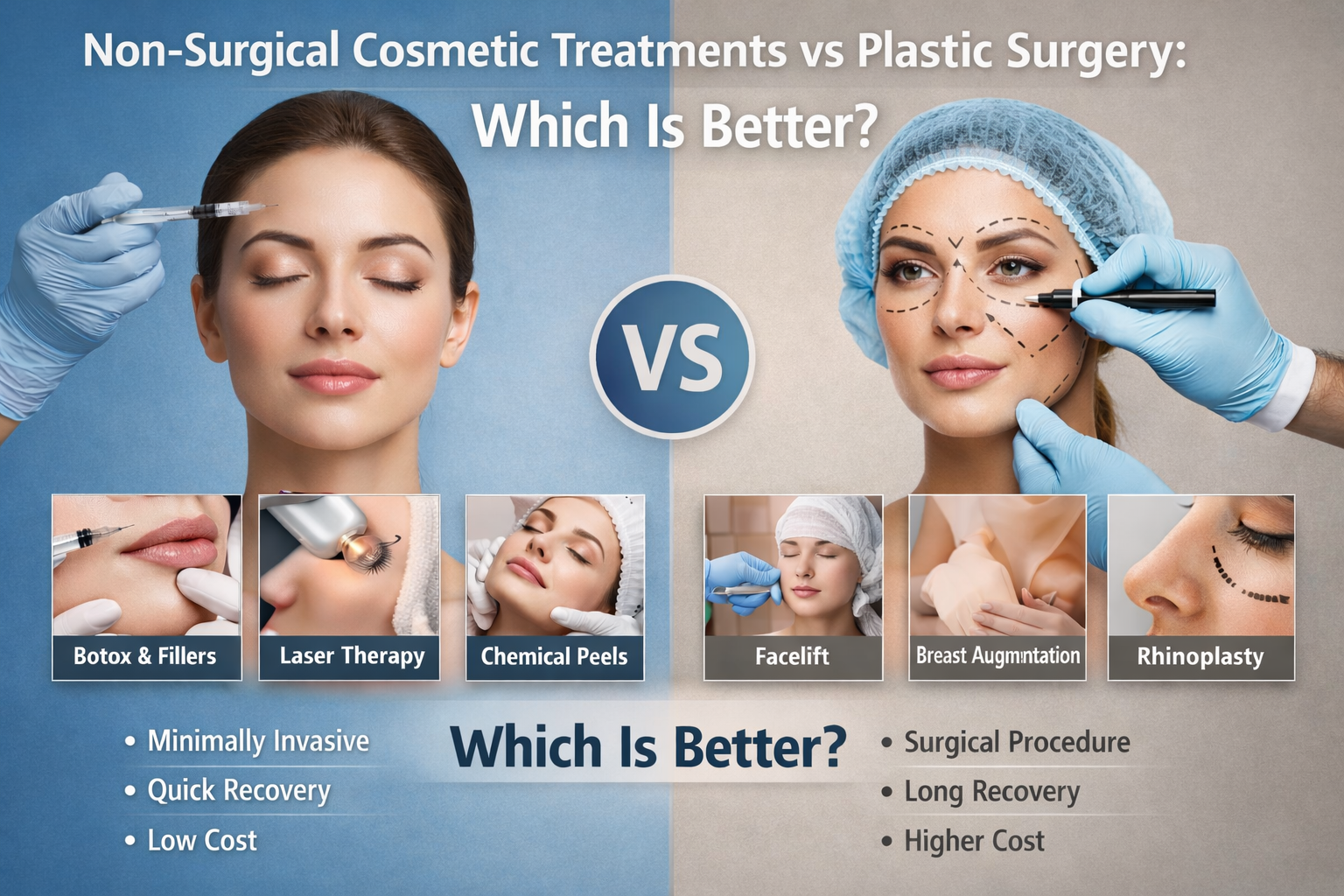
Non-surgical cosmetic treatments are minimally invasive procedures designed to enhance your appearance without surgery. Over the last decade, these treatments have exploded in popularity due to their convenience, safety, and natural-looking results.
Popular Non-Surgical Procedures
-
Botox and Dysport
Botox is one of the most well-known non-surgical treatments. It works by temporarily relaxing muscles to smooth out wrinkles and fine lines, particularly on the forehead, around the eyes, and between the eyebrows. Results typically last 3–6 months.
-
Dermal Fillers
Fillers are used to restore volume in areas such as the cheeks, lips, and under-eye hollows. Unlike surgery, fillers provide immediate results without significant downtime, making them ideal for those who want quick improvements.
-
Laser Skin Treatments
Laser therapies target pigmentation, acne scars, sun damage, and skin laxity. Depending on the type of laser, results can range from smoother skin texture to subtle skin tightening.
-
Chemical Peels
Chemical peels exfoliate the top layers of skin to promote regeneration. They can improve texture, reduce hyperpigmentation, and give your skin a refreshed, youthful glow.
-
Non-Surgical Facelifts (Liquid Facelift)
Using a combination of fillers and Botox, liquid facelifts offer subtle lifting and contouring without surgery. This procedure is particularly appealing for patients seeking rejuvenation without the downtime of traditional surgery.
Advantages of Non-Surgical Treatments
- Minimal Recovery Time: Most treatments allow patients to return to work the same day.
- Lower Cost: Compared to plastic surgery, non-surgical procedures are far more affordable.
- Subtle, Natural Results: Ideal for those who want enhancement without dramatic changes.
- Lower Risk: Fewer complications compared to surgery.
While non-surgical treatments are convenient and safe, they often require maintenance sessions to preserve results. At Pulse Multispeciality Hospital, we ensure every patient understands both the benefits and limitations before proceeding.
Understanding Plastic Surgery
Plastic surgery involves invasive procedures that alter the structure of your face or body. While non-surgical treatments are about subtle enhancements, surgery is designed for dramatic, long-lasting transformations.
Popular Plastic Surgery Procedures
-
Facelift (Rhytidectomy)
Facelifts remove excess skin and tighten underlying tissues, addressing sagging and deep wrinkles. Results are long-lasting, often 10–15 years, but require surgical recovery.
-
Rhinoplasty (Nose Surgery)
Rhinoplasty reshapes the nose for aesthetic or functional purposes. This surgery can dramatically change your facial balance.
-
Lip Augmentation and Implants
For those seeking fuller lips, surgery provides permanent results that fillers alone cannot achieve.
-
Breast Augmentation or Reduction
Surgical procedures can enhance, reduce, or reconstruct breasts, offering life-changing results for many patients.
Advantages of Plastic Surgery
- Permanent Results: Many procedures provide results that last a decade or more.
- High Precision: Surgeons can correct structural imperfections with accuracy.
- Dramatic Transformation: Surgery allows for significant changes not possible with non-invasive treatments.
Considerations:
- Higher cost compared to non-surgical options
- Longer recovery times (often several weeks to months)
- Increased risk of complications, including infections or scarring
Non-Surgical vs Plastic Surgery: A Detailed Comparison
To better understand which option suits your needs, consider this comparison:
| Feature | Non-Surgical Treatments | Plastic Surgery |
|---|---|---|
| Procedure Type | Minimally invasive | Invasive surgery |
| Recovery Time | Hours to a couple of days | Weeks to months |
| Risks | Mild swelling, bruising | Infection, anesthesia risks, scarring |
| Results Longevity | Temporary (6 months–2 years) | Long-term, often permanent |
| Cost | Affordable, lower than surgery | Higher, significant investment |
Summary: Non-surgical treatments are ideal for subtle, low-risk improvements, while plastic surgery is best for long-term, transformative results.
Pros and Cons
Non-Surgical Cosmetic Treatments
Pros:
- Quick recovery
- Affordable
- Subtle results, often looking natural
Cons:
- Temporary results
- Requires repeat sessions
- Limited dramatic effect
Plastic Surgery
Pros:
- Permanent and long-lasting
- Dramatic transformations
- Precise correction of structural issues
Cons:
- Higher cost
- Longer recovery
- Surgical risks
Factors to Consider Before Choosing
When deciding between non-surgical and surgical treatments, consider:
-
Age and Skin Condition
Younger skin may respond well to fillers and Botox, whereas sagging or structural changes may require surgery.
-
Desired Results
Are you seeking subtle enhancement or a dramatic transformation?
-
Recovery Time
Non-surgical treatments have minimal downtime, whereas surgery requires careful post-operative care.
-
Budget
Surgery requires a significant upfront investment, while non-surgical procedures are more affordable but may need ongoing maintenance.
-
Safety and Risks
Evaluate your tolerance for potential complications and consult with experienced professionals.
At Pulse Multispeciality Hospital, our experts guide patients through this decision-making process, ensuring you choose the option aligned with your goals.
Popular Non-Surgical Alternatives to Surgery
Many patients prefer non-invasive options that mimic surgical results:
- Botox vs Facelift: Smooth wrinkles without cutting skin.
- Dermal Fillers vs Surgical Facial Augmentation: Restore volume naturally.
- Laser Skin Tightening vs Surgery: Improve elasticity without downtime.
- Chemical Peels and Skin Rejuvenation: Enhance glow and texture non-invasively.
These procedures are perfect for patients seeking natural-looking results, minimal downtime, and low-risk enhancements.
Recovery & Downtime Comparison
- Non-Surgical Treatments: Minimal downtime; most patients return to work the same day. Some swelling or bruising may occur.
- Plastic Surgery: Weeks to months of recovery. Swelling, bruising, and discomfort are common, and post-op care is essential.
Who Should Choose Which Option?
- Non-Surgical Treatments: Ideal for those who want subtle results, minimal downtime, and lower risk.
- Plastic Surgery: Suitable for those seeking long-lasting, dramatic changes.
Your choice should consider age, goals, budget, and lifestyle. Consulting a certified cosmetic professional is crucial to ensure safety and satisfaction.
FAQs
1. Are non-surgical cosmetic treatments safe?
Yes, when administered by certified professionals, they are generally safe with minimal risks.
2. Do fillers last longer than plastic surgery?
No. Fillers are temporary (6–18 months), while surgery offers long-lasting results.
3. Is plastic surgery better than Botox?
It depends on your goals. Botox is excellent for subtle wrinkle reduction, while surgery provides dramatic changes.
4. What cosmetic procedures do not require surgery?
Botox, dermal fillers, laser treatments, chemical peels, and non-surgical facelifts.
5. How long do non-surgical treatments last?
Typically 6 months to 2 years, depending on the procedure and maintenance.
Conclusion
Choosing between non-surgical cosmetic treatments and plastic surgery depends on your goals, lifestyle, and comfort level with risks. Non-surgical treatments offer subtle, natural results with minimal downtime, while plastic surgery provides dramatic, long-lasting transformations.
At Pulse Multispeciality Hospital, our team helps patients navigate this choice safely, ensuring the procedure you choose aligns with your unique needs and desired outcomes. Remember: looking your best starts with making an informed, confident decision.