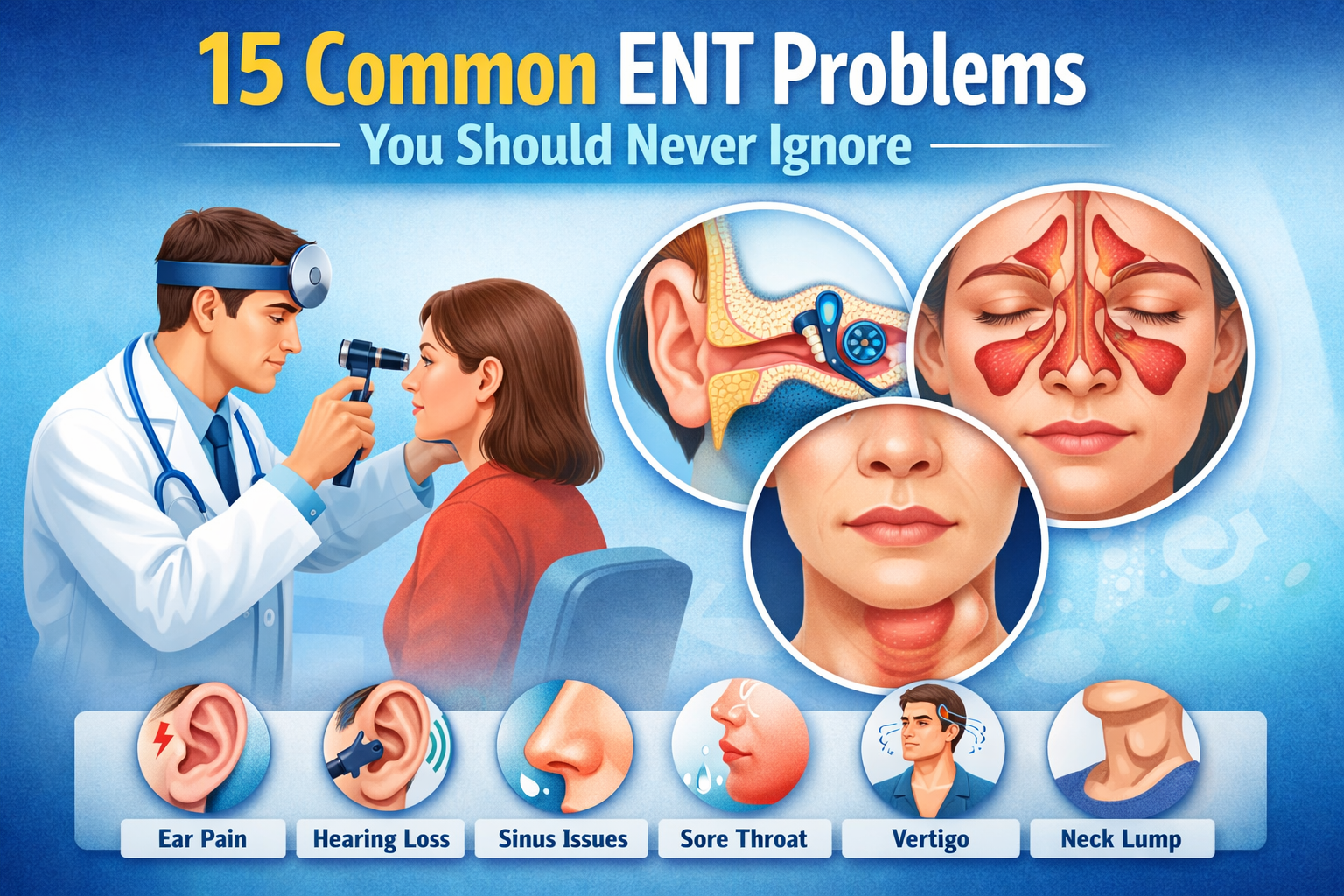
Your ears, nose, and throat are small but mighty parts of your body, playing a vital role in communication, breathing, hearing, and overall health. Ignoring issues in these areas can lead to serious complications, yet many people brush off the early warning signs.
In this guide, we’ll explore 15 common ENT problems you should never ignore, the symptoms to watch out for, and when it’s time to consult a specialist. Understanding these conditions can help you take proactive steps toward better ENT health.
What is ENT and Why It Matters
ENT stands for Ear, Nose, and Throat, and the medical field that specializes in these areas is called Otolaryngology. ENT specialists are trained to diagnose and treat a wide range of conditions, from ear infections and sinus problems to more serious throat and head issues.
Even minor symptoms, like a persistent sore throat or occasional dizziness, could signal something that needs attention. Early intervention often prevents complications and improves your quality of life. If you are looking for expert care, Pulse Multispeciality Hospital, a leading ENT hospital in Tathawade, provides comprehensive ENT services with experienced specialists to guide you through diagnosis and treatment.
Signs You Should Never Ignore in ENT Health
Not all symptoms require a doctor's visit, but some warning signs are impossible to ignore. Be vigilant if you notice:
- Persistent ear pain or discharge
- Sudden hearing loss or ringing in the ears (tinnitus)
- Chronic nasal congestion or sinus infections
- Frequent nosebleeds
- Difficulty swallowing or persistent throat pain
- Voice changes or hoarseness lasting more than two weeks
- Dizziness or balance problems (vertigo)
Keeping track of these symptoms can help you spot problems early and seek timely care.
The 15 Common ENT Problems
Below are the most common ENT problems, their symptoms, causes, and guidance on when to see a doctor.
1. Ear Infections (Otitis Media & Otitis Externa)
Ear infections are common, especially in children, causing ear pain, fluid discharge, and sometimes fever. Swimmer's ear is a type of external ear infection caused by water exposure. Persistent symptoms require medical attention, as untreated infections can affect hearing and balance. Early treatment ensures relief and prevents complications.
2. Hearing Loss
Hearing loss can be gradual or sudden, affecting communication and daily life. Symptoms include muffled hearing, difficulty following conversations, and asking people to repeat words. Causes range from aging and noise exposure to infections. Prompt evaluation by an ENT specialist can prevent further deterioration and improve quality of life.
3. Tinnitus (Ringing in Ears)
Tinnitus is the perception of ringing, buzzing, or humming without external sound. It can be caused by hearing loss, earwax buildup, or prolonged exposure to loud noises. Persistent tinnitus may indicate underlying ear or neurological problems. Early consultation with an ENT specialist can help diagnose the cause and suggest effective treatment.
4. Vertigo & Balance Disorders
Vertigo causes dizziness, spinning sensations, and nausea, often stemming from inner ear or vestibular disorders. It can affect mobility and daily activities. Symptoms may be sudden or recurring. ENT evaluation is crucial to identify the underlying cause and provide treatment, such as vestibular therapy or medications to restore balance and prevent falls.
5. Sinusitis (Chronic & Acute)
Sinusitis is inflammation of the sinuses causing nasal congestion, facial pain, postnasal drip, and sometimes fever. Acute sinusitis usually resolves within a couple of weeks, while chronic cases can last months. Recurrent infections require ENT consultation to prevent complications and may involve medications, nasal sprays, or surgical intervention for relief.
6. Nasal Polyps
Nasal polyps are soft, painless growths inside the nasal passages that can block airflow and reduce the sense of smell. Symptoms include persistent congestion and difficulty breathing. Causes include chronic inflammation or allergies. Medical management or minor surgery may be required depending on severity, ensuring proper nasal function and improved quality of life.
7. Deviated Septum
A deviated septum occurs when the nasal wall is misaligned, causing obstruction and difficulty breathing. Symptoms include snoring, nasal congestion, and frequent sinus infections. Mild cases may be managed conservatively, but severe deviations often require surgical correction. Consulting an ENT specialist ensures proper diagnosis and treatment to restore comfortable airflow.
8. Snoring and Sleep Apnea
Snoring is common, but it can indicate sleep apnea, a condition causing pauses in breathing during sleep. Symptoms include loud snoring, daytime fatigue, and poor concentration. Untreated sleep apnea increases risks of heart disease and high blood pressure. ENT specialists can evaluate and recommend treatments such as CPAP devices or minor surgical interventions.
9. Tonsillitis & Tonsil Stones
Tonsillitis is inflammation of the tonsils, often causing sore throat, difficulty swallowing, and bad breath. Tonsil stones are hardened debris in the tonsils that can cause discomfort and odor. Recurrent infections or large stones may require removal. ENT evaluation ensures proper diagnosis and treatment to prevent complications and discomfort.
10. Hoarseness & Voice Disorders
Hoarseness or persistent voice changes can result from vocal strain, infections, or more serious issues like throat tumors. Symptoms include a raspy, weak, or altered voice. If hoarseness lasts more than two weeks, an ENT specialist should be consulted. Early diagnosis helps treat underlying conditions effectively and protects vocal health.
11. Nosebleeds (Epistaxis)
Frequent or severe nosebleeds (epistaxis) may result from dry air, trauma, allergies, or clotting disorders. While minor nosebleeds often stop on their own, persistent or heavy bleeding requires ENT evaluation. Proper diagnosis and treatment prevent recurrence and complications, ensuring nasal health and preventing unnecessary discomfort.
12. Allergic Rhinitis / Hay Fever
Allergic rhinitis causes sneezing, itchy eyes, nasal congestion, and postnasal drip. Triggers include pollen, dust, or pet dander. While symptoms are usually mild, untreated allergies can lead to sinus infections, sleep disturbances, or worsen asthma. ENT specialists can provide effective treatment strategies, including medications, nasal sprays, or allergy management plans.
13. Earwax Impaction
Excessive earwax buildup can cause hearing difficulties, ear discomfort, and tinnitus. Using cotton swabs can worsen the problem or damage the ear canal. Professional removal by an ENT specialist is the safest solution. Early intervention prevents complications, improves hearing, and alleviates discomfort without harming the ear.
14. Throat Infections (Pharyngitis, Laryngitis)
Throat infections such as pharyngitis and laryngitis cause pain, difficulty swallowing, and sometimes hoarseness. Viral infections often resolve naturally, but bacterial infections may require antibiotics. Persistent or severe symptoms should be evaluated by an ENT specialist to prevent complications like abscesses or chronic inflammation, ensuring effective treatment and recovery.
15. Head and Neck Masses / Tumors
Lumps or swelling in the head or neck may be benign or malignant. Symptoms include painless lumps, persistent swelling, or unexplained discomfort. Early detection is crucial for effective treatment. Consulting an ENT specialist promptly ensures proper diagnosis, timely intervention, and the best chance for a positive outcome.
When to See an ENT Specialist
Some ENT problems are minor, but certain signs require professional evaluation:
- Persistent or worsening pain in ears, nose, or throat
- Hearing loss or ringing in ears
- Recurrent sinus infections
- Difficulty swallowing or persistent hoarseness
- Dizziness, vertigo, or balance issues
- Lumps or masses in the head or neck
Regular checkups and early consultation with an ENT specialist, such as those at Pulse Multispeciality Hospital, can prevent complications and ensure proper treatment.
Prevention and Home Care Tips
While some ENT issues require medical intervention, there are ways to maintain ear, nose, and throat health:
- Practice good hygiene to prevent infections
- Avoid excessive exposure to loud noises
- Use a humidifier to prevent dry nasal passages
- Stay hydrated and maintain a balanced diet
- Manage allergies effectively
- Don't ignore persistent symptoms — early care is key
Frequently Asked Questions (FAQs)
Q1: What causes tinnitus and how is it treated?
Tinnitus is often caused by hearing loss, noise exposure, or earwax buildup. Treatment depends on the cause, ranging from sound therapy to medical intervention.
Q2: How do I know if my sinus infection is serious?
If symptoms last more than 10 days, recur frequently, or include fever, facial swelling, or vision problems, consult an ENT specialist.
Q3: Can ENT problems go away on their own?
Some minor issues may resolve, but persistent or recurring problems require professional evaluation to avoid complications.
Q4: When should I see a doctor for throat pain?
If throat pain lasts more than a week, is severe, or comes with difficulty swallowing or lumps, it's time to consult an ENT specialist.
Conclusion
Your ears, nose, and throat are essential for daily life, and even seemingly minor symptoms can be warning signs of serious problems. From ear infections and hearing loss to sinusitis and throat disorders, ignoring these issues can lead to complications.
Be proactive, monitor symptoms, and consult an ENT specialist when needed. Early action can protect your health, prevent complications, and ensure you enjoy a better quality of life. Pulse Multispeciality Hospital offers expert ENT care for adults and children, providing comprehensive services to help you stay healthy.